
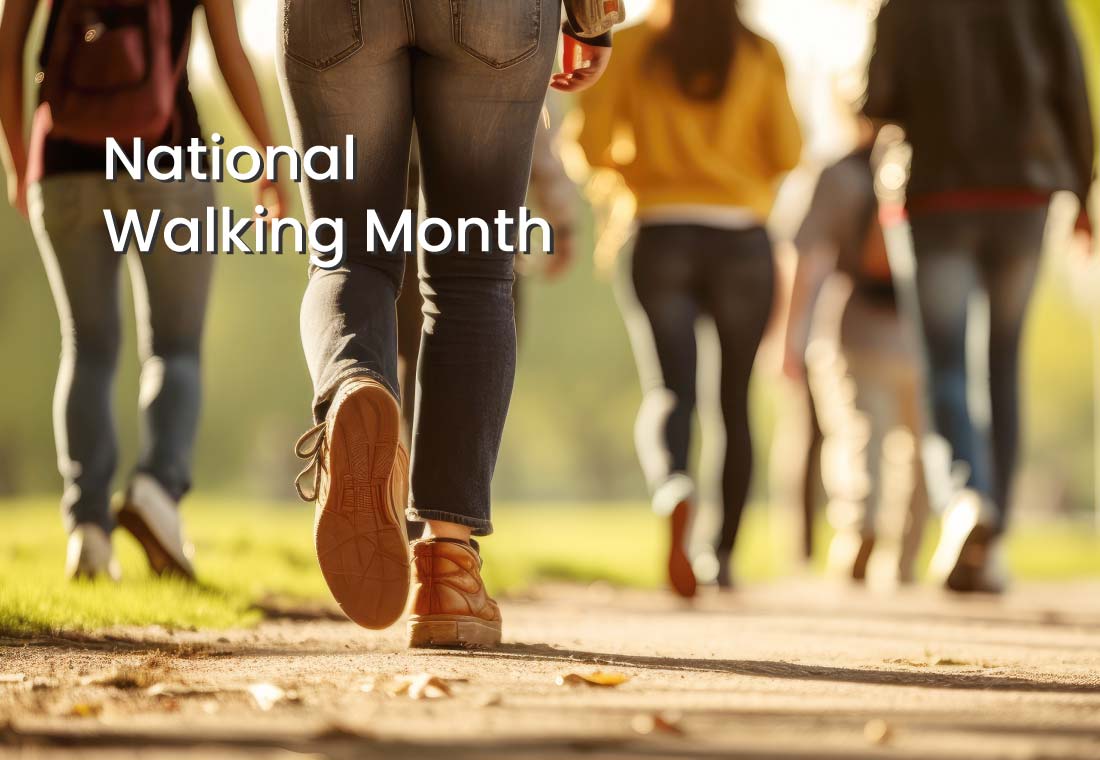
National Walking Month
Supporting Health and Wellbeing Across the Community
National Walking Month, held throughout May in the UK offers a meaningful opportunity for NHS organisations, healthcare professionals, and patients to reconnect with one of the simplest and most accessible forms of movement: walking. At a time when pressures across healthcare remain high, walking can serve as a gentle yet powerful tool to support physical health, mental wellbeing, and workplace resilience.
For NHS encouraging walking initiatives during National Walking Month can have a positive impact on staff morale and productivity. Healthcare workers often spend long hours in demanding environments, which can lead to fatigue, stress, and burnout. Promoting walking—whether through short breaks, walking meetings, or step challenges—can help create moments of recovery within busy schedules. Even a brief 10-minute walk can offer a reset, helping staff return to their roles with improved focus and reduced stress levels.
For healthcare workers themselves, walking is a realistic and inclusive way to incorporate movement into daily routines. Unlike structured exercise, walking does not require special equipment, gym memberships, or significant time commitments. It can be integrated into commutes, lunch breaks, or even transitions between departments. Importantly, walking outdoors—where possible—can also enhance mental wellbeing by providing exposure to natural light and fresh air, both of which are known to support mood regulation.
Patients, too, can benefit significantly from walking, particularly when it is approached with care and consideration for individual health needs. For many people managing long-term conditions, recovery from illness, or mental health challenges, walking offers a low-impact and adaptable form of activity. Healthcare professionals can play a key role in encouraging patients to engage in walking at a pace and level that feels safe and achievable. This might mean starting with just a few minutes a day and gradually building up over time.
National Walking Month also presents an opportunity to strengthen community connections. Group walks organised by NHS trusts, local councils, or charities can foster a sense of belonging and mutual support. For patients who may feel isolated, these initiatives can provide both social interaction and gentle physical activity, contributing to overall wellbeing.
From an organisational perspective, embedding walking into workplace culture can have long-term benefits. Simple measures—such as signage encouraging stair use, access to safe walking routes, or flexible break policies—can help normalise movement throughout the day. Over time, these small changes can contribute to healthier, more engaged teams.
Importantly, messaging around walking should remain inclusive and sensitive. Not everyone will be able to walk easily, and alternatives or adaptations should always be acknowledged. The aim is not to place pressure on individuals, but to offer encouragement and accessible options that support wellbeing in a compassionate way.
If the word ‘exercise’ feels triggering or loaded with past failures, replace it with ‘gentle movement.’ Whether you’re managing diabetes, cardiac recovery, depression, or joint pain, the path is there for you to take in your own time. Your body is not an obstacle to overcome; it’s the partner walking with you, one step at a time.